
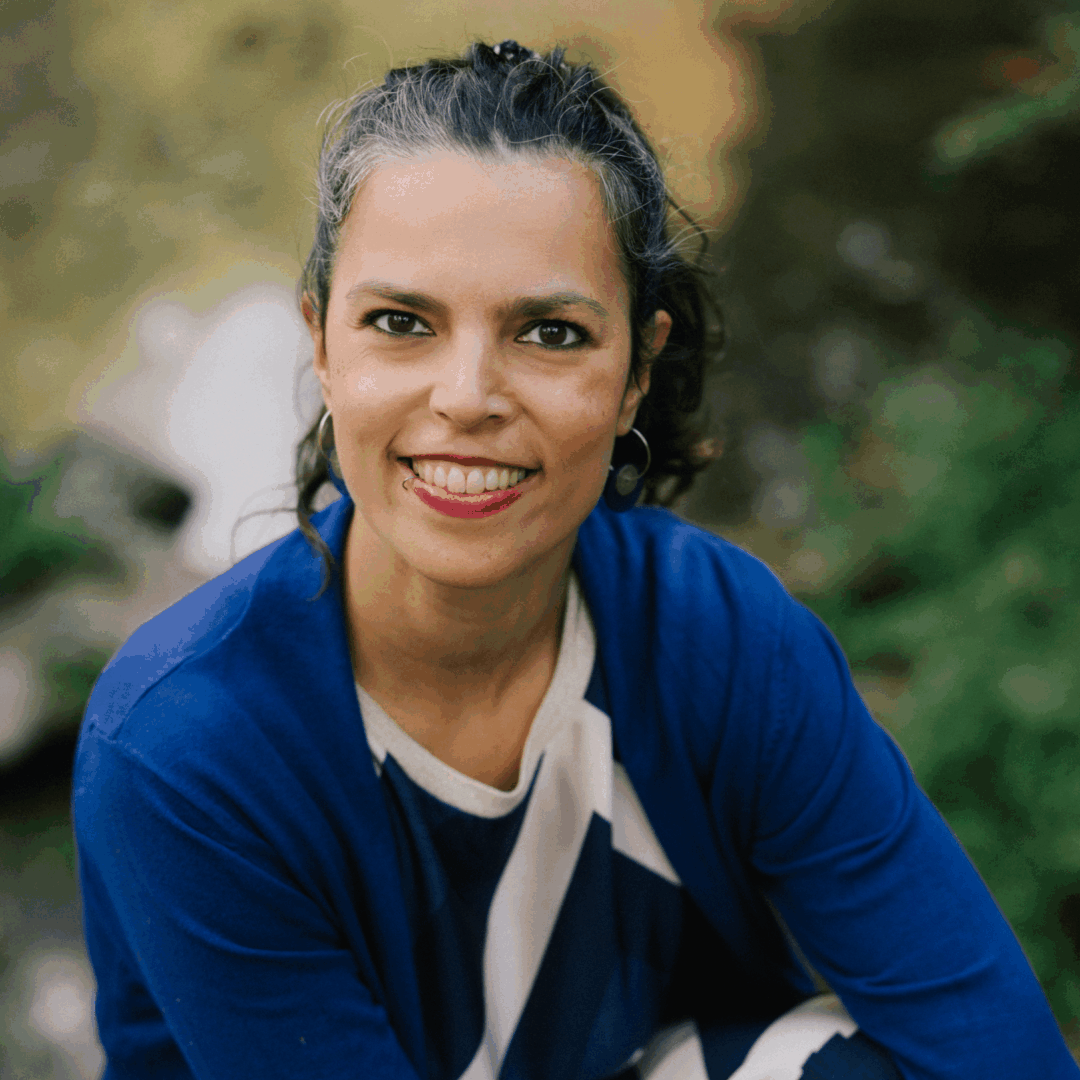
In this engaging interview, we sit down with Antonia Proka to discuss the exciting world of energy communities. As an energy transition expert, Antonia is the Head of Capacity Building at REScoop.eu – the European federation of energy communities. We were fortunate to have Antonia share her insights on her journey into the energy space, the future of citizen action, a gender-just energy transition and more!
“The concept of energy communities was introduced in the EU legislation for the first time in 2019 through the Clean Energy for all Europeans package as Renewable Energy Communities and Citizens Energy Communities. Since then, there has been notable progress, but there are still some barriers. What do you recognize as priorities going forward?”
First of all, let me say that I’m not actually a policy advisor for REScoop.eu. Nevertheless, I am happy to discuss this very interesting question with you.
Priority number one is to get the concepts discussed and the directives transposed into the national laws. We see that the transposition is not going as smoothly as we would have imagined. Our goal in the REScoop.eu is to support our members to collaborate and to help the national governments in rightfully transposing The European directives that recognize the rights of the citizens to take part in the energy transition through the renewable energy communities and the citizen energy communities.
The second thing that keeps us and our members busy is trying to address the instances of governments not perfectly transposing the directives, thus leaving space for a corporate capture of the concepts, especially in the concept of citizen energy communities. We see that in many cases, companies launch energy communities, supposedly involving also other stakeholders, like citizens, but in reality, they try to take advantage of the benefits that were foreseen to enable citizen participation. It is critical to ensure that the concept remains the key tool for the citizens to participate in the energy transition, take benefits and share the responsibility of the energy transition without being kicked out by the bigger players.
The third area I would add is access to financing. We are now working on ensuring that the energy communities get referred to when it comes to the bigger financial tools of the European Union, such as the Social Climate fund for instance. It is not only critical to have energy communities recognized as the beneficiaries of these financial tools but also to try to match the particular needs based on the different phases that the energy communities are going through. For instance, when starting new communities, it would be ideal to have support in the form of grants or technical assistance. And then, as the communities grow, and move ahead with the construction and the operation of their plants, loans or specific guarantees would be a better fit.
The last thing I will mention that we want to see more is the principle of inclusion within the legal framework of the energy communities. We wish to have more clearly supported initiatives that address communities in vulnerable situations and to move beyond the typical profile of a member of an energy community and enable fair participation for everyone.
“Can you elaborate on the importance of collaboration between energy cooperatives across Europe? Are there any success stories that particularly stand out to you?“
There are many inspiring examples of collaboration between energy communities, and I would also like to invite you to visit our website, where we regularly feature monthly success stories, many of which focus on collaboration between different initiatives.
One notable example is Electra Energy, an energy community from Greece, which partnered with the Albanian environmental organization Milieukontakt Albania to help launch Albania’s first energy community project. A standout case from this collaboration is a collective of farmers in the village of Piskova, who organized and installed a small solar plant to power their irrigation pump. This lighthouse project has served as a model for replication.
Another inspiring initiative is Solarna Stara, a network of rooftop solar power plants in Serbia. It was partially funded through a crowdfunding campaign. This kind of support from the energy community movement was the first of a kind collaboration and its success enabled replicating the funding model in other projects.
We also see strong examples of peer-to-peer support among energy communities. For instance, Cooperativa Copernico in Portugal received significant assistance from several energy cooperatives across the EU during its early stages. Now that Copernico is well-established and running multiple projects, it actively supports the establishment of new energy communities.
These examples show how energy communities are not only supporting initiatives within their own countries but also fostering collaboration across borders within the EU.
We’ve also seen successful partnerships between local authorities and citizen-led initiatives. On the island of Crete, for example, several municipalities collaborated with the local energy community Minoan to meet legal eligibility requirements for decarbonization support.
Another case is Energia Bonita on the island of La Palma. This initiative was made possible through the backing of the local municipality, which funded two half-time positions to help map stakeholders, identify opportunities, and develop potential projects. A few years later, Energia Bonita managed to install projects and secure both national funding and European technical assistance to expand its operations. Finally, I’d like to highlight an area we hope to see flourish even more: collaborative financing – stronger partnerships between established energy communities to help kickstart new ones. REScoop MECISE is a European Cooperative Society, that does exactly that: it aims to offer financial facilitation services to energy communities and foster collaborations between energy communities and local municipalities.
“How do you envision the future of citizen energy cooperatives in Europe by 2030?“
I wish to see what we have imagined and what we have been imagining over the past years that we have been working in the community energy movement. Nowadays, unfortunately, the context is changing. We have a lot of shifts, we have the ongoing invasion in Ukraine, the genocide in Gaza close to our boarders, we have the new political context slowly shifting towards more conservative decision-making. Despite this, I remain hopeful and believe that even the more conservative political parties will recognize the importance of working together with the local communities in order to manage to address the challenges. I was encouraged to see that when we launched the Europeans Energy Communities Facility, we had people from across the political spectrum, and they were all talking about the value of citizen involvement in the energy transition.
Looking ahead, by 2030, it would be great to see every citizen engaged in an energy community, in one way or another. Whether it is through participating as an active member, taking part in the decision-making, investing and mobilizing more people to join or simply joining to receive the benefits of renewable energy.
They say that you need to aim high and then be happy if you end up somewhere in the middle. But I would genuinely be happy if we could really manage to get everyone on board. And by everyone, I mean not only more women actively participating in the energy communities but individuals from different socio-economic, socio-cultural and religious backgrounds.
For instance, I’m based in Brussels, and the diversity of this city is really impressive. It is important that the energy transition reaches beyond the European bubble and includes all local communities. For example, there are many communities with roots in Sub-Saharan Africa, and it would be great to ensure that everyone benefits from the energy transition. And it is not only about the benefits, we really do need everyone to manage to address this challenge.
I am also excited about the potential for technological innovation driven by the citizen- and renewable energy communities. There are a lot of activities and work being done related to the issue of flexibility and it will be interesting to see how the citizens can support and benefit from engaging in flexibility service and demand management of the energy system. But we must start now by ensuring access not just to smart meters, but also to the data they generate. That is already a challenge, and I hope that in five years, we’ll have moved well beyond it.
In terms of innovation, I would love to see energy communities connecting with other sectors like agriculture. There are already inspiring examples (agri-voltaics) where solar installations are used to support farming, creating win-win scenarios. For instance, solar panels can provide shade for crops that don’t need constant sun, or create grazing areas for animals, while also generating clean energy. We need to join forces and make better use of the landscape. We have to find a way to share and to connect different societal priorities. These kinds of synergies are powerful, and I hope we will see many more of them in the future.
“The gender gap is a challenge affecting the energy industry. This challenge is also prevalent in the energy community sector. Despite the progress made, gender gap still exists. Could you tell us more about the benefits of gender equal energy communities?“
First of all, I keep on saying that we need everyone on board to face the challenges ahead. By involving women and other underrepresented groups, we gain more capacity to respond. Increasing participation also builds trust, not only in the energy communities but the energy transition as a whole.
We see that the energy communities and energy initiatives that have a gender-just board tend to be more successful. They are in a better position to advance when it comes to implementing their own strategies and goals. When women are involved, they bring different perspectives and ideas for the way forward, which are incredibly valuable for solving complex challenges
I need to mention the fact that often when we talk about energy communities, we focus too much on the energy part and not enough on the community part. Historically, women have played key roles in nurturing collaboration and bringing people together.
I am not saying that men cannot do this, or that they should not, but I am just saying that this is historically one of the tasks that women had, for good and bad reasons, and we have the capacity to really bring people together. To make the energy transition successful, we really need to bring people together.
“What policies or initiatives at the EU level support women’s involvement in energy communities, and how effective have they been in practice?“
There are initiatives at the European level that promote gender mainstreaming more broadly, and we have seen some examples of EU actions targeting the energy sector as a whole. Within that framework, our focus is on energy communities. For instance, I represent REScoop.eu in the European Commission’s “Equality in the Energy Sector” initiative. We are really glad to see initiatives that highlight fair compensation, equal pay for equal work, for example.
Of course, it is important to recognize that not all energy communities have paid staff, so these kinds of measures don’t always apply directly. Still, they point in a positive direction and help set standards that can influence the sector more broadly.
Another positive example, though not directly linked to energy communities but discussed within the movement, is the initiative to require gender equality plans. Institutions that want to access funding need to have a gender equality plan in place, with goals, measures, and indicators to track progress. We try to support our members in meeting these requirements, and we have developed an inclusivity guidebook with suggestions and ideas that come from the energy community movement and different initiatives. Among those suggestions is the development of a gender equality plan.
We are also seeing that, in several countries, criteria in relation to (gender) inclusion and equality are established giving an additional score in tenders. That is definitely a step in the right direction.
Of course, we need to make sure these initiatives aren’t just being developed to tick the box but are implemented in practice.
“REScoop.eu is actively promoting gender-just energy transition. Could you tell us about initiatives and activities dedicated to tackling the challenges of gender inequality?“
REScoop.eu engages in gender justice in two levels. One is the organisational level of REScoop.eu, i.e. the organization, and the other is the level of our members and overall the energy communities movement whether they are formal members or not. Our goal is to support and inspire all energy communities. While there is the ambition to diversify both in the organization and the movement, we are not there yet. Nevertheless, we have strong ambition.
As I mentioned earlier, we have developed an inclusivity guide that aligns with and aims to support several cooperative principles: i) voluntary and open membership; ii) education, training and information; iii) cooperation among cooperatives; iv) concern for the community, among others. We also organize a lot of different events focusing on the benefits of the just energy communities. For instance, at our recent European Energy Community Forum, we held two specific sessions focusing on just and inclusive energy communities. One focused on different models of inclusive energy communities, the projects they have developed and challenges they have faced, and the other one focusing on inclusive communications. So, how can we better communicate about the energy communities in order to be more inclusive and involve everyone.
From the broader perspective, we try to be present in different events and different initiatives that focus on energy communities, energy inclusion and justice and we work to ensure that the principle of gender justice is part of those discussions.
Now, moving to the organisation REScoop.eu internally, we have developed our own gender equality plan, and we track the progress. We are currently in the second year of tracking progress. We have a lot of measures, and the plan is publicly available, but I will mention one of the examples that relates to the representation. We had already formalised that the President and Vice President need to be from different genders, and now we have extended that on the coordinator level having two people from different genders taking care of our daily operations.
We have also adjusted the way we communicate when it comes to the open positions that we advertise, and we see that many more women apply.
We offer flexible working hours, which is really important. As you can see, I am the sole caregiver for my little one at the moment. So, I need to pause work at certain times, but I can pick it up again later. It’s not about being constantly present, I can work from home and manage my tasks when he is asleep or when I have a quiet moment. That kind of flexibility makes a big difference.
Finally, when we talk about and focus on justice and equality it is important to remember that our (gender) approach needs to be intersectional touching on issues related to socio-economic, race, religion, disability, and other backgrounds.
“Could you tell us about your personal journey? What inspired you to get involved in the energy transition, and what positive experiences have you had in relation to gender equality?“
So, what inspired me? The role of role models is indeed crucial. I met some incredibly inspiring women who motivated me to join. After completing my bachelor’s degree, I started my master’s studies in the Netherlands, where I focused on energy communities. Later, during my PhD, I specifically researched energy cooperatives. I interviewed many different cooperatives, and in quite a few cases, I saw that the president, the strong person, was a woman. These women were so supportive, sharing their knowledge and helping me understand how their cooperatives worked. I was genuinely inspired.
As I started connecting with cooperatives and energy communities across Europe, I met even more inspiring women. That is when I felt I wanted to become active and be part of this movement. And fortunately, today I am. I have had the chance to meet the right people, gain the necessary knowledge, and find ways to contribute to the energy community movement.
And it is not just women who inspired me. We often think that only women can empower other women to become confident and proactive, but I am also very grateful to the men who believed in me and supported my growth. Their encouragement helped me progress and, hopefully, become more useful to the movement.
“What do you find the most rewarding about your work with energy cooperatives? “
First of all, I have to say what is really rewarding is seeing that people who dream big actually make it happen, sooner or later. I mentioned earlier that I am originally from Greece, and I was involved in developing one of the first guides for energy communities there. Now, a couple of years later, I see that the concept is actually understood, and there are many established initiatives with important and inspiring projects.
I did my PhD on the topic in the Netherlands because the movement there was more advanced, and they had the ambition to share that knowledge and support communities across Europe. Seeing that, only a few years later, energy communities have indeed established great projects across Europe is very heartwarming.
There is also a great example related to our earlier conversation about the inclusivity guide. An initiative in Greece adopted a tip shared by a more advanced initiative in Spain. It started organizing general assemblies offering dedicated childcare. This way, both mothers and fathers could attend and participate. When the initiative in Greece held its own assembly, implementing the same idea, it made a real impact.
To me, this is what learning from each other looks like. Seeing that by facilitating this kind of exchange of inspiration and knowledge, we can achieve great results by just connecting initiatives and acting as a mediator in this process makes my work feel meaningful.
If we can celebrate small wins along the way, they give us the energy and motivation to keep pushing toward our bigger goals for 2030. They help us stay driven to overcome the barriers and challenges ahead. Collaboration both within national contexts and across Europe is key. And I’m really happy to be part of that collective effort.